The following (non-exhaustive) list of papers shows peer-reviewed work that has been published using the Vapourtec R-Series and E-Series flow chemistry systems. As new work is continually published, please check here for updates.
Use the filter tools to see the chemical applications that are possible, but note that most published papers will require a journal subscription.
Download a list of all publications citing Vapourtec
Due to their high versatility borylated and silylated compounds are inevitable synthons for organic chemists. To escape the classical hydroboration/hydrosilylation paradigm, chemists turned their attention to more modern and green methods such as photoredox chemistry and electros...
Relevant Applications
Authors
-
Biremond T
-
Riomet M
-
Jubault P
-
Poisson T
-
Normandie Univ., INSA Rouen, UNIROUEN, CNRS, COBRA (UMR 6014), 76000 Rouen, France
This personal account provides an overview of work conducted in my research group, and through collaborations with other chemists and engineers, to develop flow electrolysis cells and apply these cells in organic electrosynthesis. First, a brief summary of my training and backgro...
Relevant Applications
Authors
-
School of Chemistry, The University of Southampton, Southampton, SO17 1BJ UK
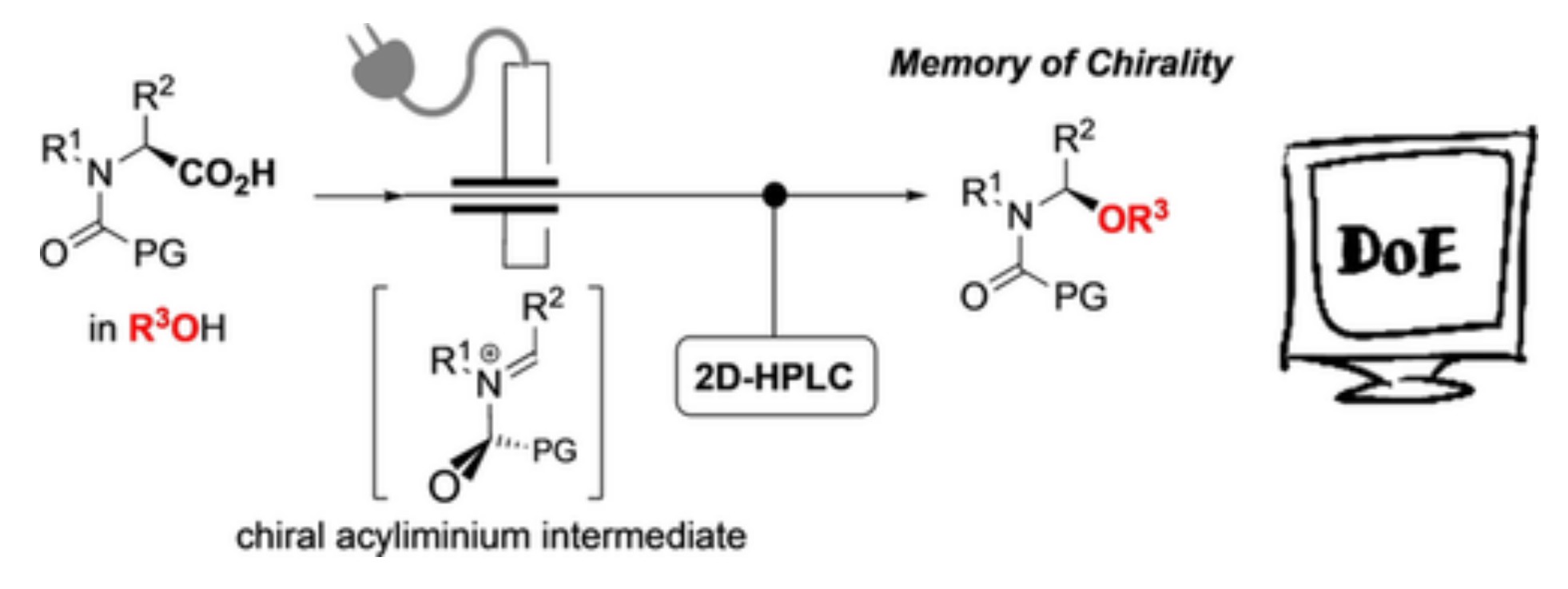
Amino acid derivatives undergo non-Kolbe electrolysis to afford enantiomerically enriched α-alkoxyamino derivatives through intermediate chiral carbenium ions. The products contain N,O-acetals which are important structural motifs found in bioactive natural products. The reactio...
Relevant Applications
Authors
-
Santi M
-
Seitz J
-
Cicala R
-
Hardwick T
-
Ahmed N
-
Wirth T
-
School of Chemistry, Cardiff University, Main Building, Park Place, Cardiff, CF10 3AT UK
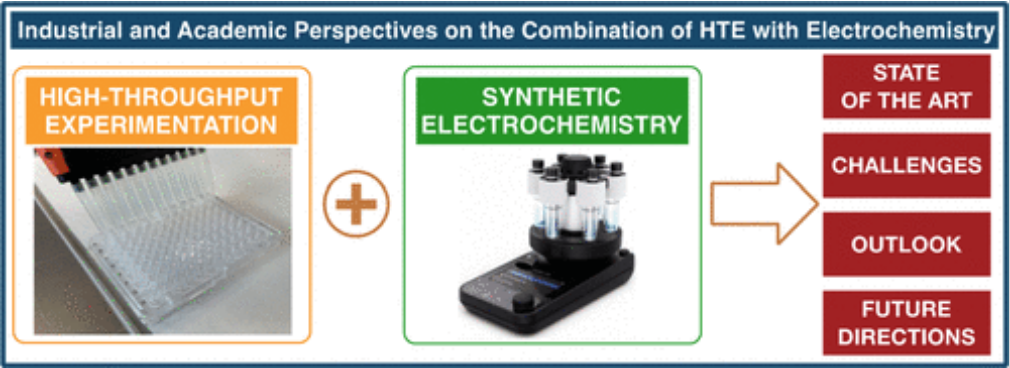
Electrochemical transformations involve complex parameter interactions, ranging from universal chemistry variables such as solvent and reagents to specialist factors including electrode material and current density. Hence, the development of a robust and scale-independent electro...
Relevant Applications
Authors
-
Wills A1,2
-
Charvet S3
-
Battilocchio C4
-
Scarborough C4
-
Wheelhouse K5
-
Poole D1
-
Carson N6
-
Vantourout J3
-
1Medicinal Chemistry, GlaxoSmithKline, Medicines Research Centre, Gunnels Wood Road, Stevenage SG1 2NY, United Kingdom
-
2Department of Pure & Applied Chemistry, University of Strathclyde, Thomas Graham Building, 295 Cathedral Street, Glasgow G1 1XL, United Kingdom
-
3Univ Lyon, Université Lyon 1, CNRS, INSA, CPE-Lyon, ICBMS, UMR 5246, Bâtiment LEDERER, 1 rue Victor Grignard, 69622 Villeurbanne Cedex, France
-
4Research Chemistry, Syngenta Crop Protection, Schaffhauserstrasse 101, CH-4332 Stein, Switzerland
-
5Chemical Development, GlaxoSmithKline, Medicines Research Centre, Gunnels Wood Road, Stevenage SG1 2NY, United Kingdom
-
6Syngenta Jealott’s Hill International Research Centre, Bracknell, Berkshire RG42 6EY, United Kingdom
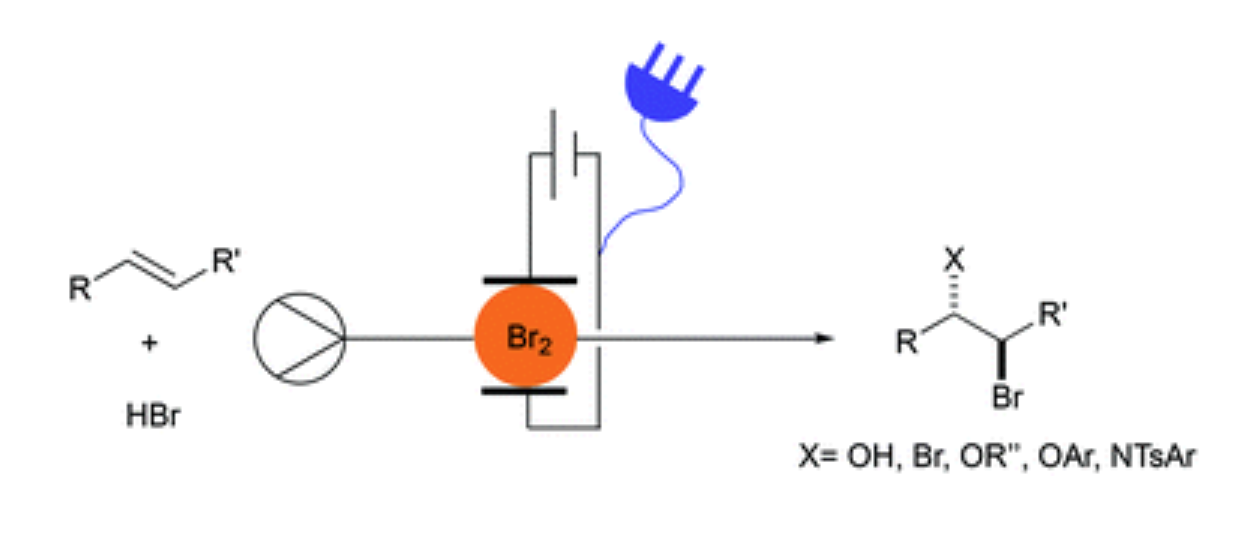
The bromination of organic molecules has been extensively studied to date, yet there is still a demand for safe and sustainable methodologies. Hazardous reagents, selectivity, low atom economy and waste production are the most persisting problems of brominating reagents. The elec...
Relevant Applications
Authors
-
Jakob Seitza
-
Thomas Wirth
-
Cardiff University, School of Chemistry, Park Place, Main Building, Cardiff CF10 3AT, Cymru/Wales, UK