
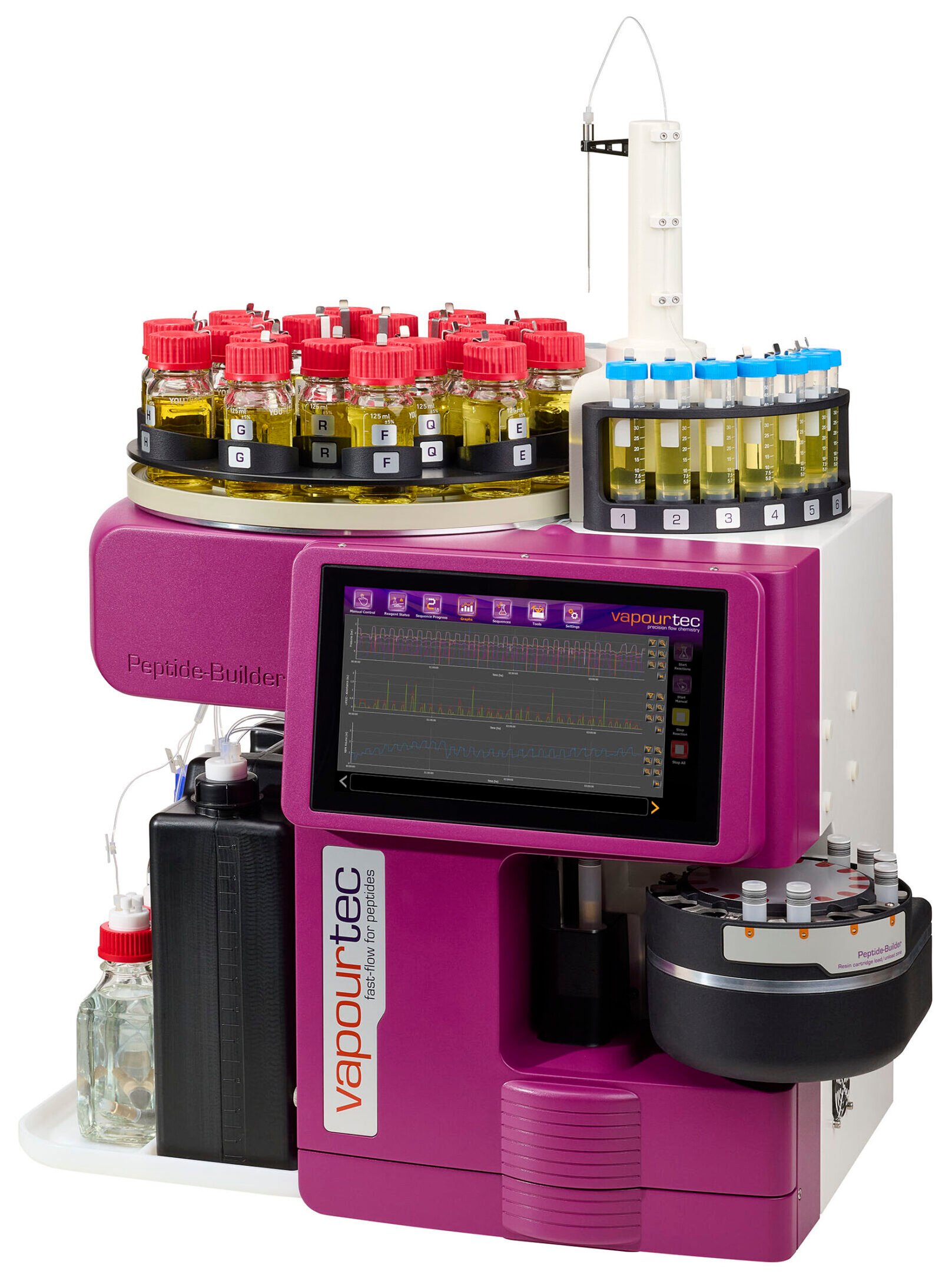
Practical Insights into Overcoming Common Challenges in Peptide Synthesis
Join Vapourtec’s peptide scientists for a series of live technical webinars exploring practical solutions to challenging aspects of solid-phase peptide synthesis (SPPS).
Each webinar focuses on a specific synthesis challenge, drawing on experimental data and representative case studies to demonstrate practical approaches to improving synthesis efficiency, crude purity and reproducibility using Fast-Flow SPPS.
Sessions include a 30-minute technical presentation followed by 15 minutes of live Q&A, providing an opportunity to discuss your own synthesis challenges with our scientists.
Upcoming Webinar
Fully Automated Synthesis of Branched Peptides
Date: Wednesday 9 December
Time: 15:00 GMT | 16:00 CET | 10:00 EST
30-minute technical presentation followed by 15 minutes of live Q&A
Branched peptides present additional challenges in solid-phase peptide synthesis (SPPS), requiring selective side-chain deprotection, multiple coupling steps and changes in solvent conditions. These additional processes can make synthesis time-consuming and labour-intensive, particularly when manual intervention is required.In this webinar, we demonstrate how Fast-Flow SPPS enables the fully automated synthesis of branched peptides. Using experimental results from representative syntheses, we explore how automated solvent switching, selective side-chain deprotection and subsequent coupling steps can be integrated into a single, unattended synthesis workflow.
What you’ll learn:
- Practical strategies for the efficient synthesis of branched peptides.
- How automated solvent switching reduces the need for manual intervention.
- Approaches to selective side-chain deprotection and subsequent coupling.
- Experimental results demonstrating fully automated branched peptide synthesis.
Can’t attend live? Register anyway and we’ll send you the recording.
Presenters
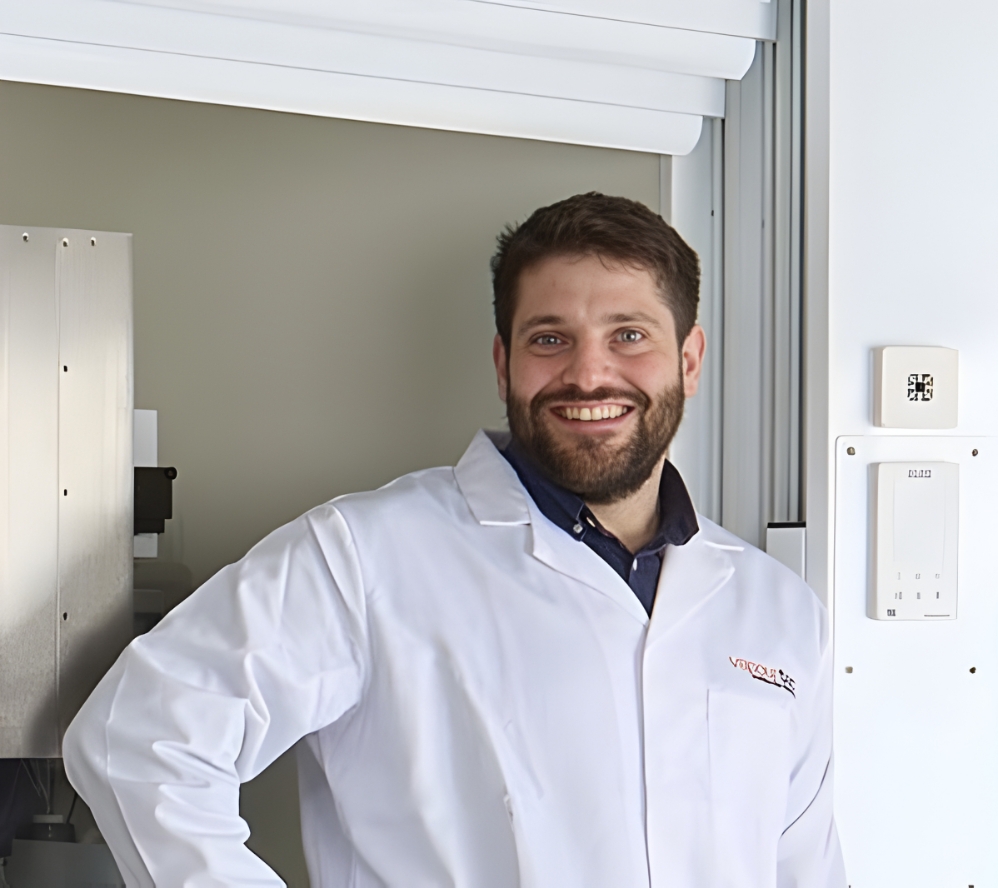
Dr Manuel Nuño
Chief Scientific Officer
Dr Manuel Nuño leads Vapourtec’s scientific team, working closely with researchers to develop and optimise flow chemistry and peptide synthesis applications. His work focuses on translating experimental challenges into practical, reproducible synthesis methods.

Dr Induka Abeysena
Product Manager – Peptide Synthesizers
Dr Induka Abeysena specialises in automated peptide synthesis, supporting researchers in the development and optimisation of Fast-Flow SPPS workflows and helping them make effective use of real-time synthesis monitoring.