
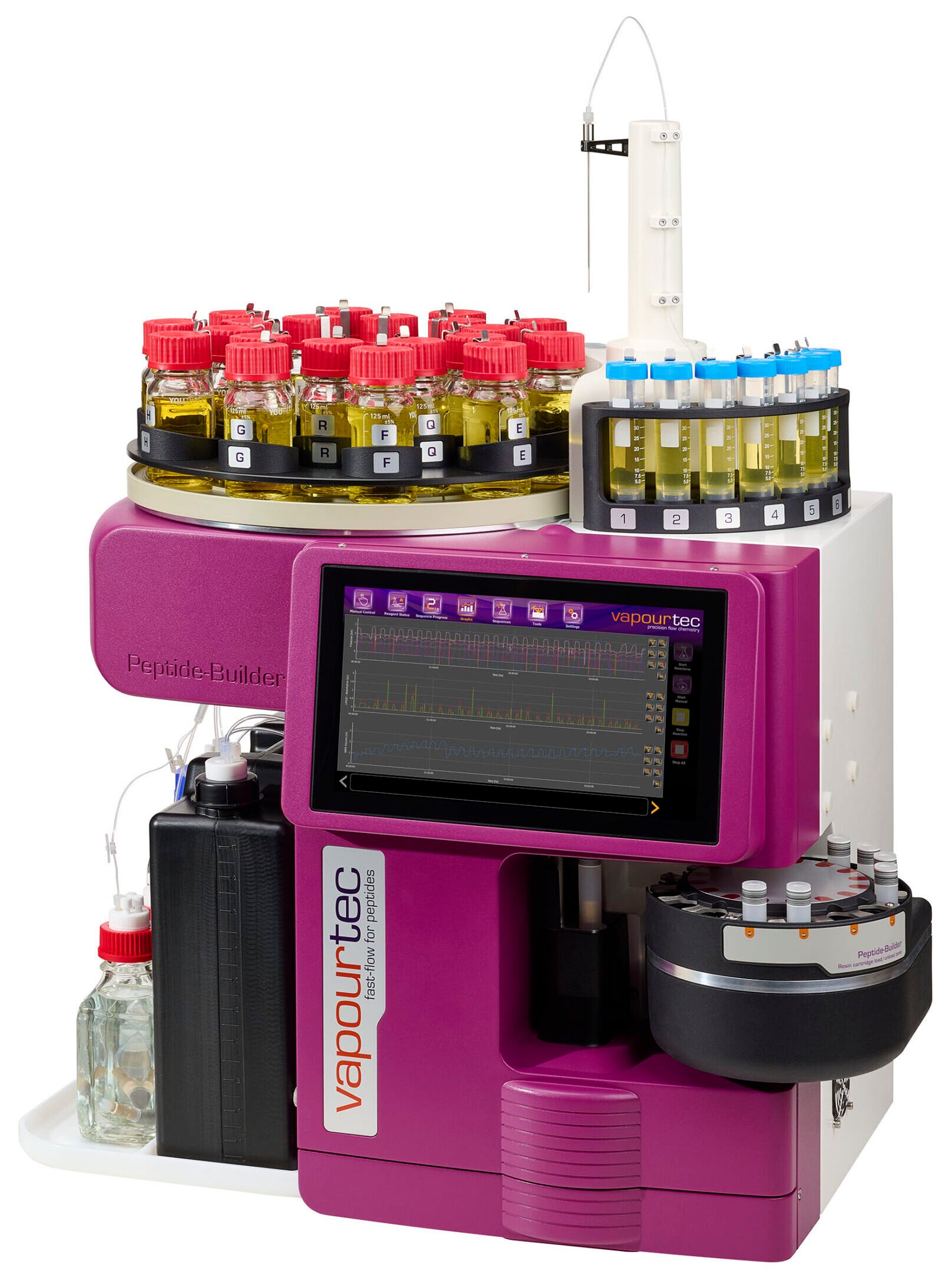
Practical insights into overcoming common challenges in peptide synthesis
Join our peptide scientists for a series of live 30-minute technical webinars exploring practical approaches to some of the most challenging aspects of solid-phase peptide synthesis (SPPS) with Q&A with our peptide scientists.
Each webinar focuses on a specific synthesis challenge, combining experimental data, representative case studies and live demonstrations to illustrate how Fast-Flow SPPS can improve peptide purity, reproducibility and productivity.
Up coming webinars:
- Fast-Flow SPPS for N-Methyl Amino Acids
- Fast-Flow SPPS for Difficult Peptides
- Fast-Flow SPPS for Branched & Cyclic Peptides (side chain deprotection)
Whether you’re developing difficult peptide sequences, exploring N-methylated peptides, or working with branched and cyclic peptides, these sessions will provide practical insights you can apply in your laboratory.
Webinar Series
Fast-Flow SPPS for Difficult Peptides
Date: Wednesday 28 October
Time: 15:00 GMT | 16:00 CEST | 10:00 EDT
The synthesis of long and difficult peptide sequences is often limited by aggregation, incomplete coupling and poor reproducibility. With conventional peptide synthesizers, aggregation can usually only be inferred from the final LC-MS impurity profile, making it difficult to determine when or where it occurred during the synthesis.
In this webinar, we’ll explore the challenges associated with synthesizing long and aggregation-prone peptides and present experimental data demonstrating how Fast-Flow SPPS, combined with real-time resin bed volume monitoring, provides new insight into peptide behaviour throughout synthesis. Using representative peptide sequences, we’ll show how aggregation can be detected, localised and visualised as it develops, helping chemists better understand and optimize challenging syntheses.
You’ll learn:
- Why long peptide sequences are particularly challenging to synthesize
- The causes and consequences of peptide aggregation during SPPS
- How real-time resin bed volume monitoring reveals peptide aggregation
- Experimental results from representative long and aggregation-prone peptide syntheses
Fast-Flow SPPS for Branched & Cyclic Peptides (Including Automated Solvent Switching & Side-Chain Deprotection)
Date: Wednesday 9 December
Time: 15:00 GMT | 16:00 CEST | 10:00 EDT
Branched and cyclic peptides often require multiple solvent switches, selective side-chain deprotection and additional coupling steps, making them significantly more complex to synthesise than linear peptides. Developing robust synthesis workflows can be both time-consuming and labour-intensive, particularly when repeated solvent changes and deprotection cycles are required.
In this webinar, we’ll explore practical approaches to the synthesis of branched and cyclic peptides and present experimental data demonstrating how automated solvent switching and side-chain deprotection can simplify these workflows. Using representative peptide syntheses, we’ll discuss key considerations, practical strategies and methods for improving the efficiency and reproducibility of complex peptide syntheses.
You’ll learn:
- Strategies for the synthesis of branched and cyclic peptides
- Practical approaches to automated solvent switching and side-chain deprotection
- Experimental results from representative branched and cyclic peptide syntheses
- Key considerations when developing complex peptide syntheses
Attend Fast-Flow SPPS for Branched & Cyclic Peptides Webinar
Select Your Session
Duration: 30 min live session and 15min for Q&A
| Webinar Topic | Date | London GMT/BST | Berlin (CET, UTC+1) | New York (EST, UTC-5) | Book Your Place |
|---|---|---|---|---|---|
| Fast-Flow SPPS for Difficult Peptides | Wednesday 28th October | 15:00 GMT | 16:00 | 10:00 | Book Your Place |
| Fast-Flow SPPS for Branched & Cyclic Peptides (side chain deprotection) | Wednesday 9th December | 15:00 GMT | 16:00 | 10:00 | Book Your Place |
Save My Spot
Can’t attend live? Register anyway and we’ll send you the recording.
Presenters
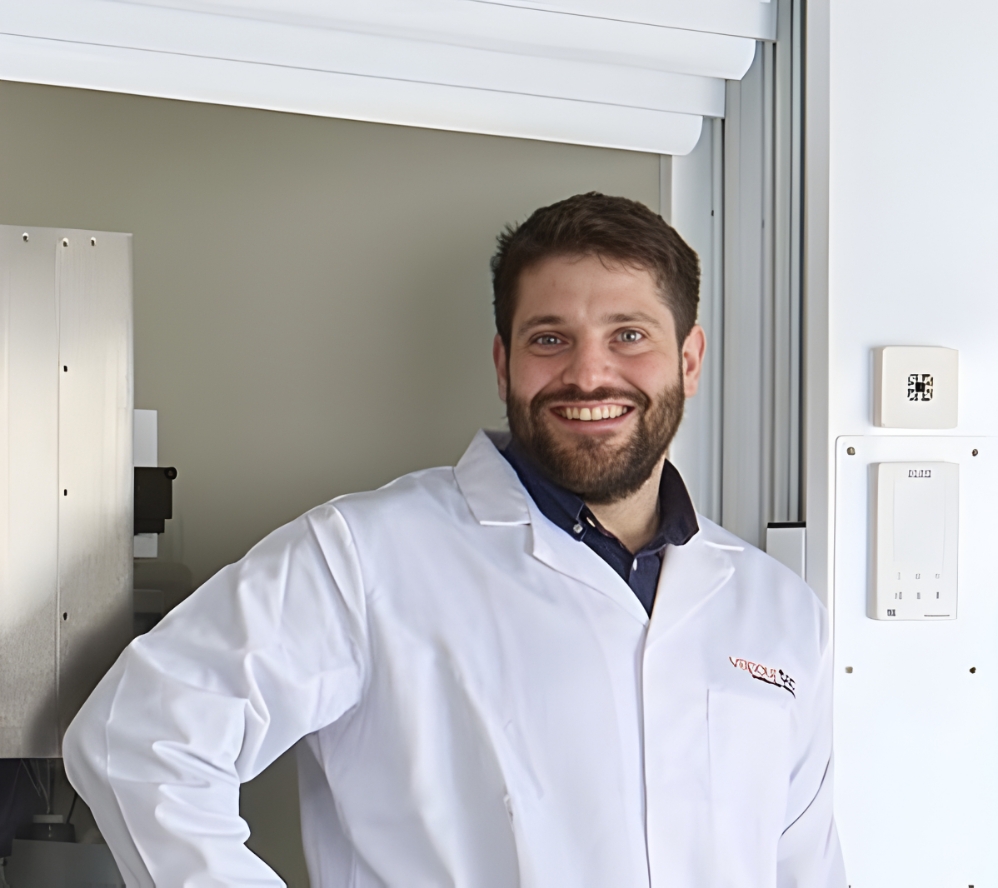
Dr Manuel Nuño
Chief Scientific Officer
Dr. Manuel Nuño is Vapourtec’s Chief Scientific Officer and leads the scientific team. With years of experience, he works closely with customers to understand their challenges and deliver science-led, practical solutions.

Dr Induka Abeysena
Product Manager – Peptide Synthesizers
Dr. Induka Abeysena is the Product Manager for Vapourtec’s peptide synthesizers, supporting customers in understanding how fast-flow technology can optimize workflows and help them get the most from their system.