Vapourtec Ltd

Telephone +44(0)1284 728659
Email [email protected]
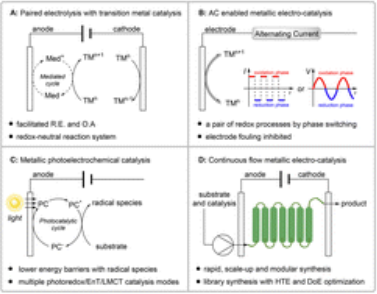
The current state-of-the-art hot research topic of C–N bond formation is focused on versatile and mild transformations. Conventional transition metal-catalyzed methods are typically conducted using specific ligands, high temperatures and stoichiometric alkoxide bases or oxidants. In this regard, metallic electrocatalyzed protocols have emerged as elegant strategies with electronic oxidative or reductive agents. This synergistic catalytic system exhibits many potential advantages compared to direct electrolysis by overcoming the energy barrier and facilitating the rate-limiting steps in oxidative addition, transmetalation or reductive elimination. This review comprehensively highlights the recent developments in metallic electrocatalyzed C–N bond formation with new methodologies and technologies. Major emphasis is placed on key factors during methodology development as well as detailed mechanism verification and description. The synthetic applications and prospects are also provided in the field of metallic electrosynthesis.