Vapourtec Ltd

Telephone +44(0)1284 728659
Email [email protected]
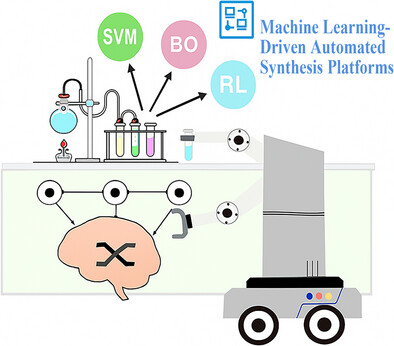
The challenges posed by global climate change and disease risks have intensified the demand for efficient and practical materials and molecules. Traditional trial-and-error approaches are becoming increasingly inefficient and resource-intensive. The rapid advancement of artificial intelligence (AI) has opened new avenues to accelerate research and shorten development cycles. In fields such as drug discovery, materials innovation, and chemistry, the application of AI has significantly improved research efficiency. As a core component of AI, ML can reduce development time and enhance experimental accuracy and efficiency. In recent years, the integration of ML with automated synthesis technologies has become a major research focus. This combination not only enables more precise chemical synthesis but also drives the digital and intelligent transformation of laboratories. This review provides a concise overview of the fundamental principles of ML and discusses its applications in drug discovery, materials innovation, and automated organic synthesis. It also highlights the latest progress in automated synthesis platforms. Finally, the review summarizes the opportunities and challenges of AI in scientific research and offers a systematic and critical perspective through representative case studies from pharmaceuticals, materials science, and chemistry, presenting a comprehensive view of the current status and future trends of AI-driven automated synthesis.