Vapourtec Ltd

Telephone +44(0)1284 728659
Email [email protected]
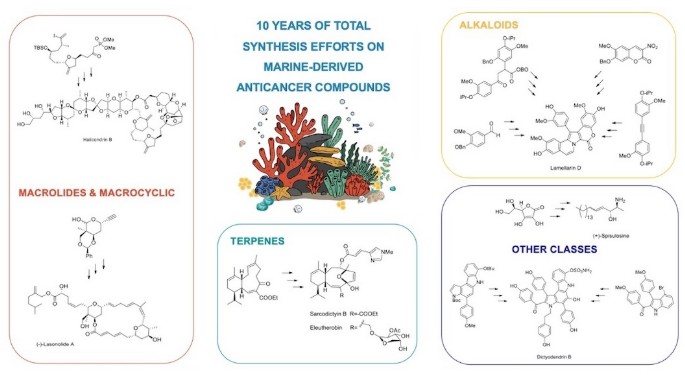
Marine ecosystems represent an exceptional reservoir of structurally diverse metabolites with remarkable pharmacological potential. Over the past decades, the exploration of marine organisms has led to the discovery of an ever-expanding number of bioactive compounds. Many of these metabolites display highly original chemical scaffolds that are not typically found in terrestrial organisms, offering new opportunities for drug discovery. Among the most promising applications is their development as anticancer agents, given their ability to interfere with key cellular processes. This review highlights marine natural products currently under investigation in preclinical studies as potential anticancer lead compounds. The molecules are classified into major structural families: aromatic and heterocyclic alkaloids, terpenes and their derivatives, macrolide frameworks, and diverse peptide-based scaffolds, alongside other complex classes (polyketides, thiazole lipids, alkylamino alcohols, and pyrrolocarbazole derivatives). A particular emphasis has been placed on the role of total synthesis over the last decade. Advances in synthetic methodology have not only enabled the production of these complex metabolites in sufficient quantities but have also facilitated the development of novel chemotherapeutic agents. To overcome the challenges of limited natural availability, the advanced synthetic approaches are crucial for harnessing the full therapeutic potential of marine-derived compounds.