Metal-Organic Frameworks (MOFs) are a class of crystalline materials characterized by their highly porous structures. They are composed of metal ions or clusters coordinated to organic ligands, creating an extensive network. The synthesis and diverse applications of MOFs have created significant attention in materials science and engineering due to their unique properties.
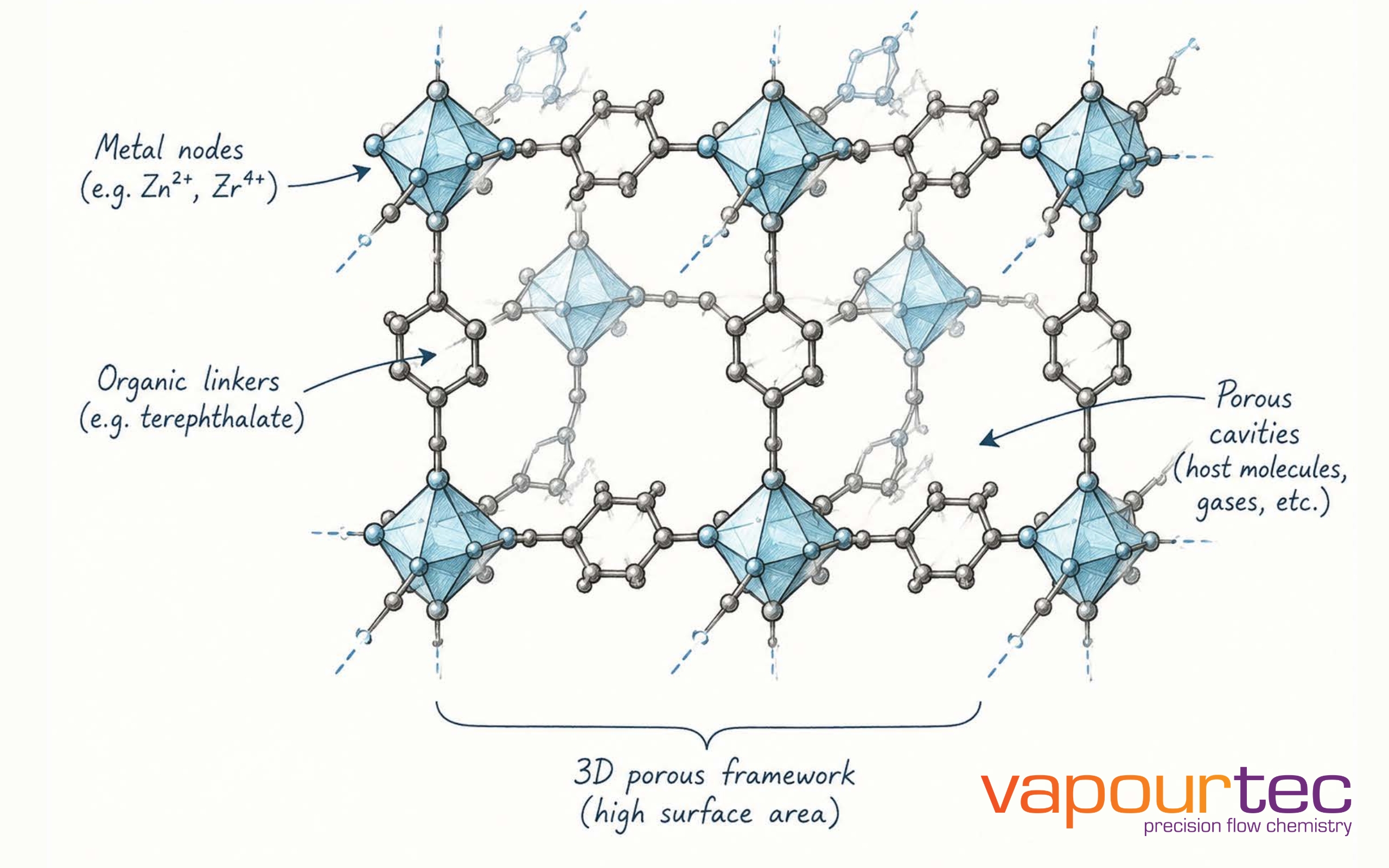
Metal–Organic Framework (MOF) synthesis relies heavily on precise control of nucleation and crystal growth – areas where continuous flow chemistry offers major advantages over conventional batch processing.
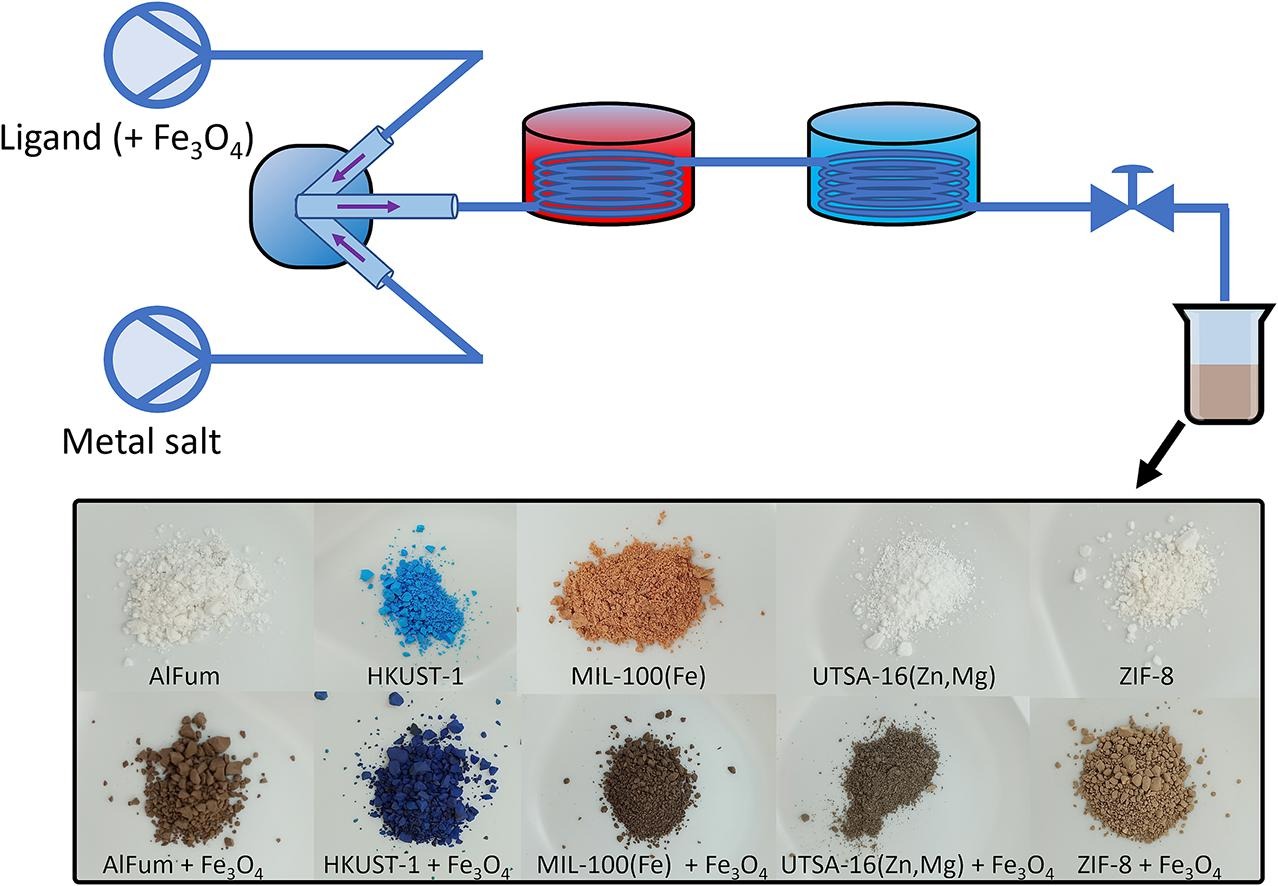
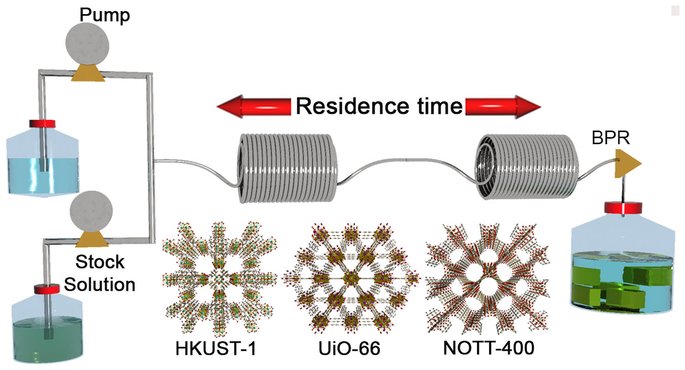
Using the Vapourtec R-Series with a coil reactor enables highly controlled mixing, temperature regulation, and residence times, helping researchers achieve more uniform crystal formation, narrower particle size distributions, and enhanced reproducibility of MOF materials.
Continuous flow conditions also allow rapid optimisation of crystallization parameters and straightforward scale-up from laboratory development to continuous production. In certain situations – particularly where elevated temperatures, pressures, reactive metal precursors, or hazardous solvents are involved – flow chemistry can also provide important safety advantages through reduced reactor inventory and improved thermal control.
Synthesis of MOFs
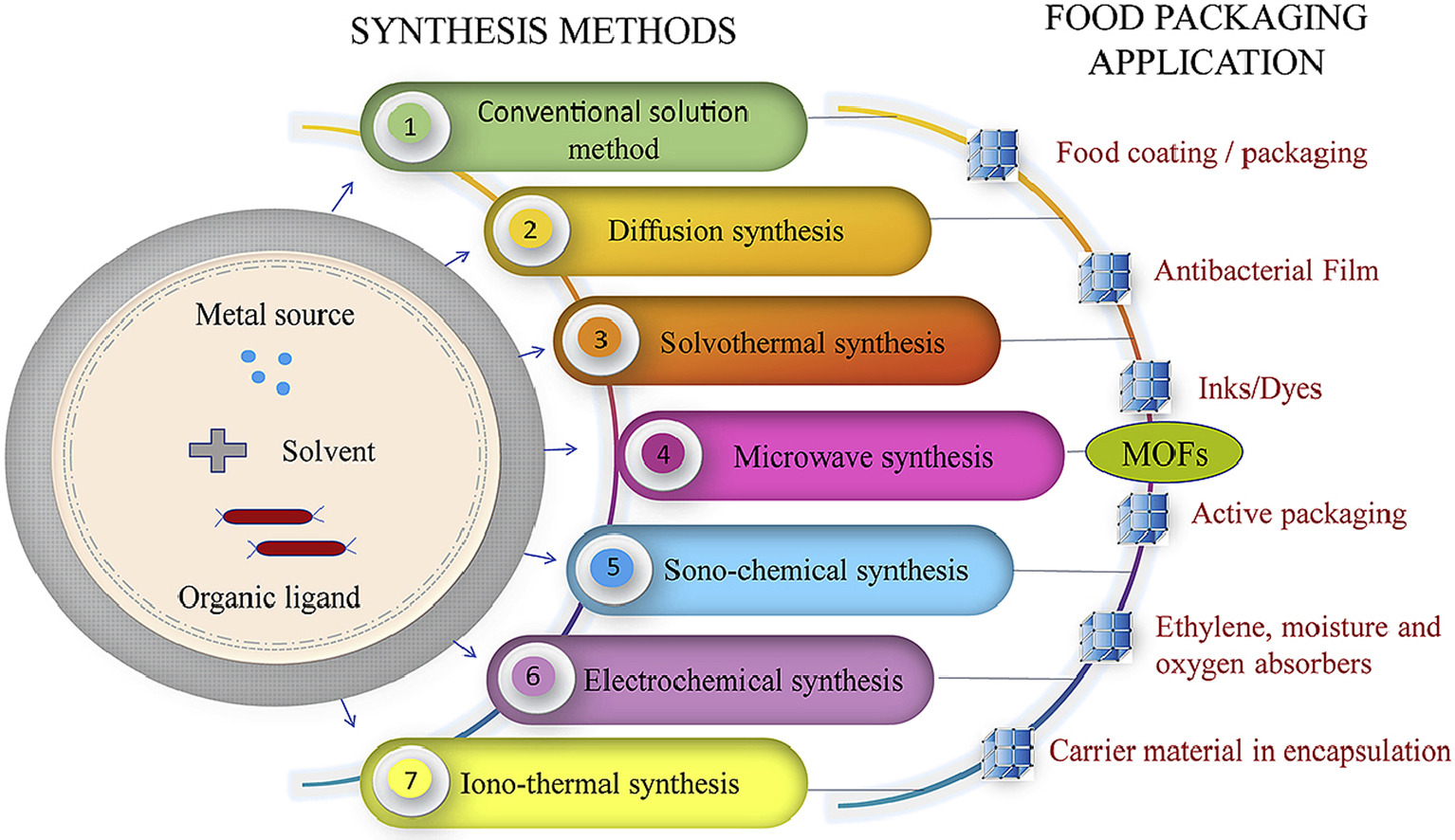
The synthesis of MOFs typically involves a solvothermal process where metal salts and organic linkers react in a solvent at elevated temperatures. Commonly used metals include zinc, copper, iron, and aluminium, while organic linkers often consist of carboxylates, phosphonates, or azolates. The choice of metal and ligand dictates the structure and properties of the resulting MOF.
- Solvothermal Synthesis: This method involves dissolving the metal salts and organic linkers in a solvent, then heating the mixture under high pressure. The temperature and time of reaction are crucial parameters that influence the crystallinity and morphology of the MOFs.
- Room Temperature Synthesis: Some MOFs can be synthesized at room temperature by mixing the precursors in a suitable solvent, making the process simpler and more energy-efficient.
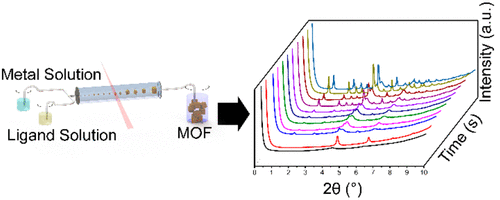
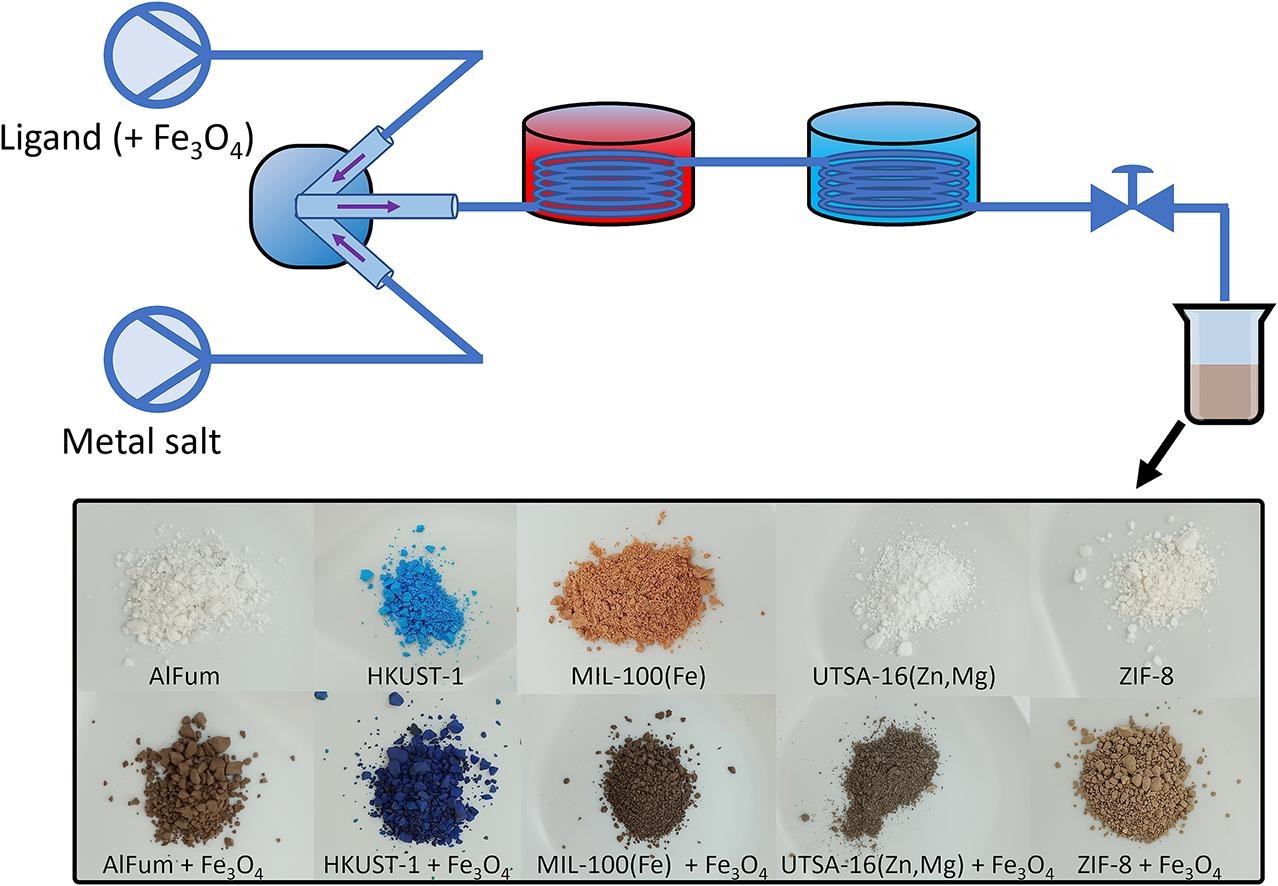
- Synthesis assisted by flow chemistry: This technique uses flow reaction systems to rapidly and safely heat the reaction mixture under high pressure, significantly reducing synthesis time and often resulting in higher yields and better crystallinity.
Applications
MOFs exhibit exceptional properties such as high surface area, tunable porosity, and chemical versatility, leading to a wide range of applications:
- Gas Storage and Separation: Metal-Organic Frameworks are highly effective in storing gases like hydrogen, methane, and carbon dioxide due to their large surface areas and porosity. They are also used in gas separation processes, selectively adsorbing specific gases from mixtures.
- Catalysis: The active sites within MOFs make them excellent catalysts for various chemical reactions, including hydrogenation, oxidation, and photocatalysis. Their tunable structure allows for the design of MOFs with specific catalytic properties.
- Drug Delivery: Metal-Organic Frameworks can encapsulate therapeutic molecules within their pores, protecting them from degradation and allowing for controlled release. This makes them promising candidates for targeted drug delivery systems.
- Sensors: MOFs can be engineered to detect specific molecules, making them useful in chemical sensing applications. Their high surface area and functionalizable pores allow for the sensitive and selective detection of gases, ions, and biomolecules.
Metal-Organic Frameworks represent a versatile and rapidly advancing area of materials science. Their unique synthesis methods and remarkable properties enable a broad spectrum of applications, from gas storage and separation to catalysis, drug delivery, and sensing. As research continues, the potential uses of MOFs are likely to expand, further impacting various scientific and industrial fields.
![Efficient flow synthesis of a Star of David [2] catenane and a pentafoil knot](https://www.vapourtec.com/wp-content/uploads/2025/02/Efficient_flow_synthesis_of_a_Star_of_David_2_catenane_and_a_pentafoil_knot.jpg)