

Date: 11 June 2026 | Category: News
Authors: Jim Mensah, Deshetti Jampaiah, Ravindra Kokate, Priyank Kumar, Inna Karatchevtseva, Yingjie Zhang, Michael Moir, and Tamim Darwish
Jim Mensah, Tamim Darwish and co-workers from ANSTO, Australia, have used the Vapourtec R-Series continuous flow system to develop a scalable flow-deuteration approach that enables the tuneable isotopic selectivity of short-chain fatty acids.[1] When compared with the traditional batch-based method, the use of flow offers high steady-state activity, improved single-pass yields, higher isotopologue selectivity (d6 vs d7), and provides mechanistic insights into isotopologue formation.
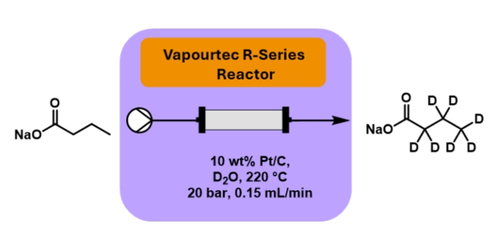 Scheme 1: General scheme for the deuteration of short-chain fatty acids.
Hydrogen−deuterium exchange (HDE)
Hydrothermal deuteration, central to hydrogen−deuterium exchange (HDE), is a means for allowing the selective incorporation of deuterium into C–H bonds that are otherwise inert. HDE is used in industry in the formation of deuterated fatty-acid analogues, themselves versatile feedstock molecules and building blocks for more sophisticated chemical structures.[2, 3] The use of metal catalysts enables HDE to occur under mild conditions, allowing greater functional group compatibility and improvements in reaction sustainability. However, there are key challenges to performing HDE reactions in batch, including site selectivity, reproducible deuteration efficiency, and uncontrolled decomposition. Flow chemistry, however, offers many advantages, including control over the residence time, temperature and pressure, which can reduce the incidence of undesired side-reactions, and can provide high levels of deuterium incorporation.
Deuteration of sodium butyrate in flow
During optimization of reaction conditions, it was noted that H/D exchange of sodium butyrate to perdeuterated sodium butyrate-d7 was dependent upon catalyst loading, flow rate, reaction temperature, and pressure. Lower flow rates, such as 0.15 mL/min, resulted in 90% D incorporation within 32 minutes, which increased to 93% after 90 minutes at 220 °C and 20 bar. Higher flow rates, such as 0.9 mL/min, resulted in lower deuteration of 44% after the same time and temperature. Using Pt/C rather than Pd/C was preferable as the Pd/C variant deactivated more rapidly, resulting in lower D incorporation. Lower temperatures, such as 130 °C, resulted in significantly lower deuteration seen, and the rate of deuterium incorporation increased proportionally with the reaction pressure. It was also noted that the reaction temperature had a bearing on the mechanism: lower temperatures (130 °C) led to the kinetic deuteration product, whereas at higher temperatures (220 °C) deuteration resulted in the thermodynamic product.
Substrate screening: batch versus flow
A direct comparison of batch and flow conditions showed the superiority of the flow-based approach. Batch reactions were slower, lower yielding and monitoring revealed that while initial deuteration was rapid – 81% deuteration achieved after 2 hours at 220 °C and 20 bar – achieving a higher degree of deuteration required a significantly extended reaction time of 72 hours. Deuteration under flow conditions, however, rapidly and reliably gave more highly deuterated analogues in quantitative yields, and the authors stated that “optimization of temperature, catalyst choice, catalyst loading, and flow rate afforded enhanced deuteration levels that are only accessible in batch after long reaction times or multiple cycles.”
References:
[1] Flow-Enabled Deuteration of Saturated Fatty Acids over Platinum Group Metals: Mechanistic and Process Insights (J. Mensah, D. Jampaiah, R. Kokate, P. Kumar, I. Karatchevtseva, Y. Zhang, M. Moir, T. Darwish, ACS Catal., 2026, 16, 7230–7245). https://doi.org/10.1021/acscatal.5c07786
[2] Late-Stage β-C(sp3)–H Deuteration of Carboxylic Acids. (A. Uttry, S. Mal, M. van Gemmeren, J. Am. Chem. Soc., 2021, 143, 10895–10901) https://doi.org/10.1021/jacs.1c06474
[3] Palladium-Catalyzed Nondirected Late-Stage C–H Deuteration of Arenes. (M. Farizyan, A. Mondal, S. Mal, F. Deufel, M. van Gemmeren, J. Am. Chem. Soc., 2021, 143, 16370–16376). https://doi.org/10.1021/jacs.1c08233