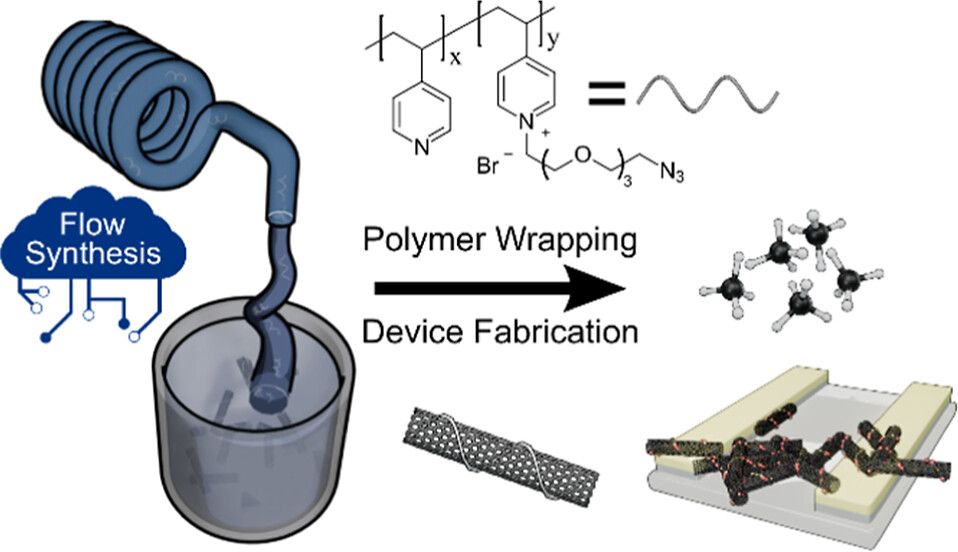
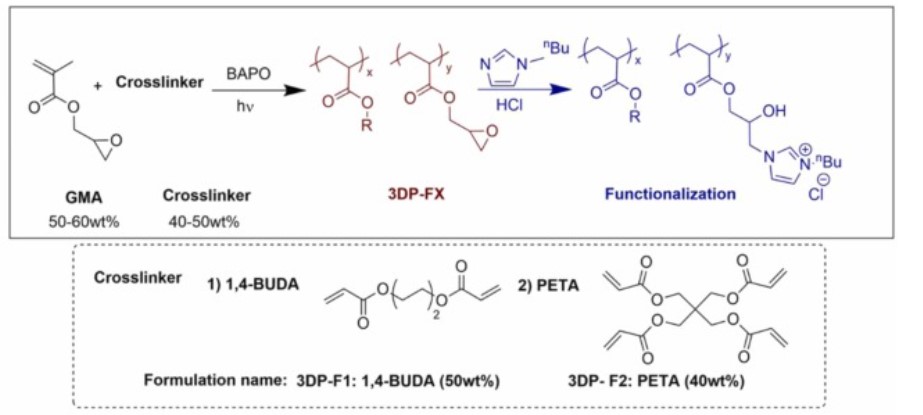
Polymer synthesis is a rapidly evolving field that demands precise control over reaction conditions to tailor molecular weight, polydispersity index, architecture, and material properties. Whether developing functional polymers for drug delivery, advanced coatings, sustainable materials, or electronic applications, researchers must often balance reaction kinetics, heat management, and monomer conversion to achieve the desired outcome. Conventional batch methods can present challenges when scaling reactions or maintaining consistent product quality, particularly for highly exothermic polymerisations or systems involving reactive monomers and initiators that can react with oxygen
Continuous flow chemistry provides a powerful platform for polymer research by enabling exceptional control over reaction temperature, residence time, reagent addition and polymer termination. This level of control allows polymerisation conditions to be tuned with greater precision, improving reproducibility and facilitating systematic investigation of structure–property relationships. Vapourtec E-Series easy-Polymer supports a wide range of polymerisation strategies, from controlled radical polymerisations to step-growth processes, while their modular design enables straightforward integration of inline analysis and multistep workflows. By providing a highly controllable reaction environment, flow technology helps researchers accelerate process development, optimize polymer properties, and generate high-quality data for both fundamental studies and application-driven research.
What is Polymer Synthesis?
Polymer synthesis, also called polymerisation, is the process by which monomers are joined together covalently to form a polymer.
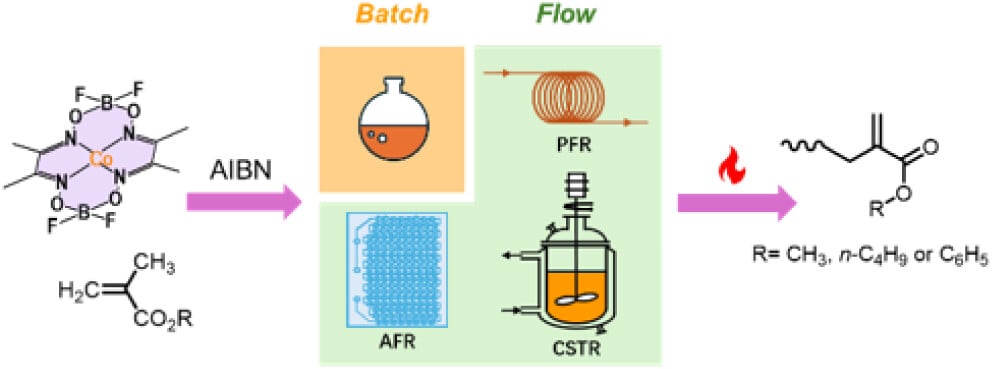
Flow chemistry has emerged as a transformative technique in polymer synthesis. Unlike traditional batch processes, where reactants are combined in a static vessel, flow systems enable precise control over reaction conditions, including temperature, pressure, and residence time. This level of control is particularly advantageous for polymer synthesis, as it allows for fine-tuning of molecular weight, polydispersity, and polymer architecture.
One key benefit of flow chemistry in polymerization is its ability to facilitate rapid heat and mass transfer. This minimizes temperature gradients and ensures uniform reaction conditions, which are critical for consistent polymer properties. Furthermore, flow systems can handle highly exothermic polymerization reactions safely by dissipating heat more efficiently than batch reactors.
The versatility of flow chemistry is evident in its application to various polymerization techniques, including:
- free-radical
- cationic
- anionic and
- controlled/living polymerizations
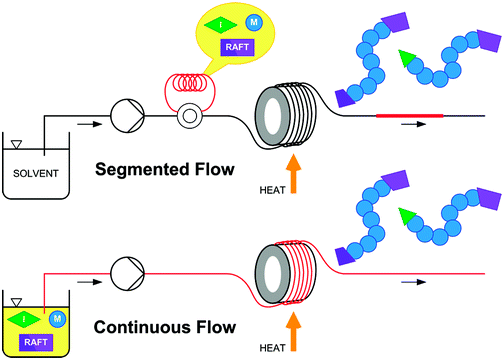
Flow chemistry is particularly effective when moisture or oxygen-free conditions are necessary, RAFT polymer synthesis is an excellent example. Flow techniques also support innovative methodologies like photo-induced polymerization and enables the integration of multistep synthesis processes in a single system.
Leveraging automation and real-time monitoring
By leveraging automation and real-time monitoring, flow chemistry enhances reproducibility and scalability, making it an indispensable tool for both academic research and industrial production. As such, it represents a paradigm shift in the field, driving advancements in polymer science and materials engineering.
Living polymer synthesis techniques
There are a number of different techniques for living polymer synthesis. These include:
- Reversible Addition Fragmentation Chain Transfer (RAFT)s
- Atom transfer radical synthesis(ATRP)
- Nitroxide-mediated synthesis (NMP)
Continuous processing offers a way to carry out these processes with great repeatability and control. Inline degassing and long residence time stainless steel reactors are used, allowing materials that are very oxygen sensitive to be processed.
Vapourtec has had the honour to work with a team of researchers at Commonwealth Scientific and Industrial Research Organisation (CSIRO) in Melbourne, Australia. CSIRO’s reversible addition fragmentation chain transfer (RAFT) technology enables researchers to develop new and advanced materials.