Application notes

Search and Filter Application Notes

The following application notes show the range of synthesis that are possible with the Vapourtec system.

Peptide Aggregation Graph

Using Real-Time Aggregation Monitoring to Optimize the FF-SPPS of Barstar (61–90)

Application Note 83 – October 2026

Suppressing aggregation early in peptide synthesis does not necessarily prevent it appearing later as the chain grows. This application note compares five strategies for reducing aggregation during Fast-Flow SPPS of Barstar (61–90), using real-time resin-volume monitoring to assess their effects throughout synthesis. Combining an ArgTag with Fmoc-Thr(Trt)-OH produced a resin-growth profile with no further aggregation signatures observed.

Real-Time Detection of Peptide Aggregation During SPPS

Detecting peptide aggregation as it happens during synthesis

Application Note 82 – July 2026

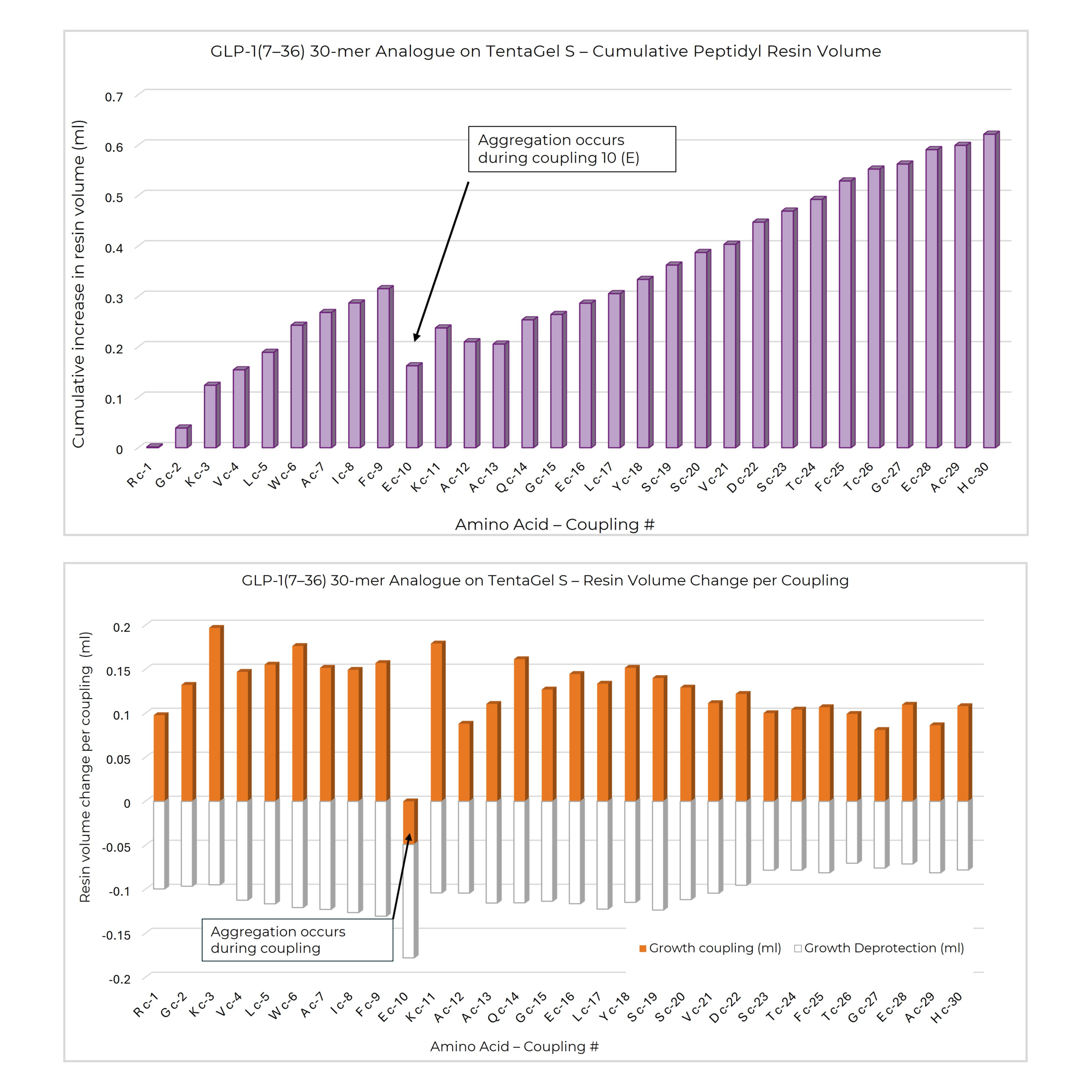
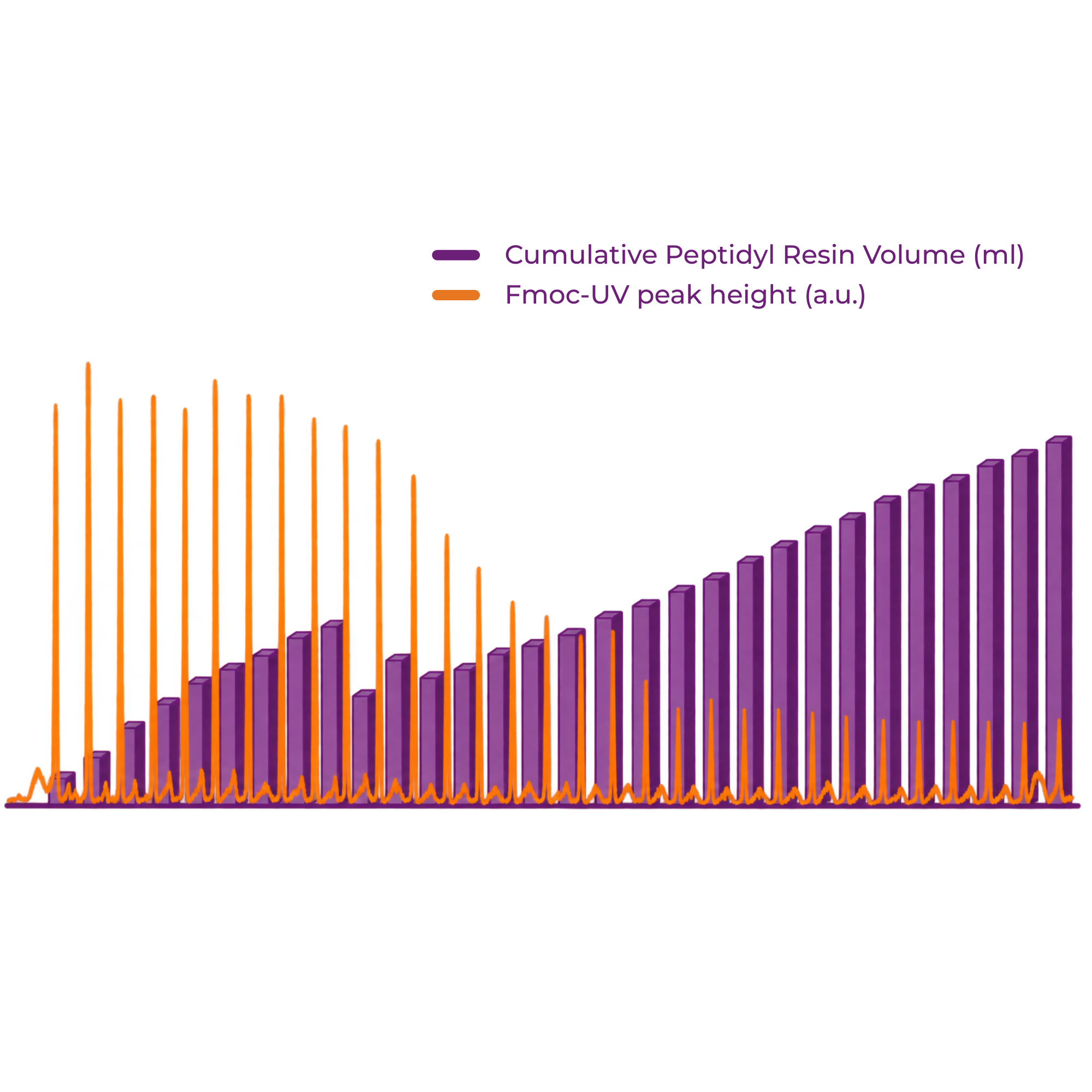
Peptide aggregation is one of the most common causes of incomplete coupling, deletion sequences and reduced crude purity during solid-phase peptide synthesis (SPPS). In this application note, we demonstrate how Vapourtec's patented Variable Bed Flow Reactor (VBFR™) technology enables peptide aggregation to be detected and localised in real time. By continuously monitoring resin bed volume throughout synthesis, aggregation events can be linked directly to individual coupling and deprotection steps, allowing chemists to identify problematic sequence regions and optimize synthesis conditions with confidence.

Peptide-Builder Carousel

Synthesis of N-methylated peptides in continuous flow

Application Note 81 – December 2025

Peptides incorporating N-methyl amino acids are notoriously difficult to synthesize by conventional batch SPPS, often leading to long cycle times, high deletion levels, and reduced crude purity. In Application Note 81, Vapourtec demonstrates a validated fast-flow SPPS (FF-SPPS) protocol using Oxyma/DIC activation that enables reliable incorporation of N-methylated and other sterically hindered residues.

Peptide-Builder

High throughput synthesis of peptides with high crude purity

Application Note 80 – December 2025

High-throughput fast-flow synthesis delivers sixteen 16-mer peptides at ~90% crude purity, with real-time monitoring and fully unattended weekend operation on the Peptide-Builder.

VBFR Mount

Cleaving peptides in flow

Application Note 72 – November 2021

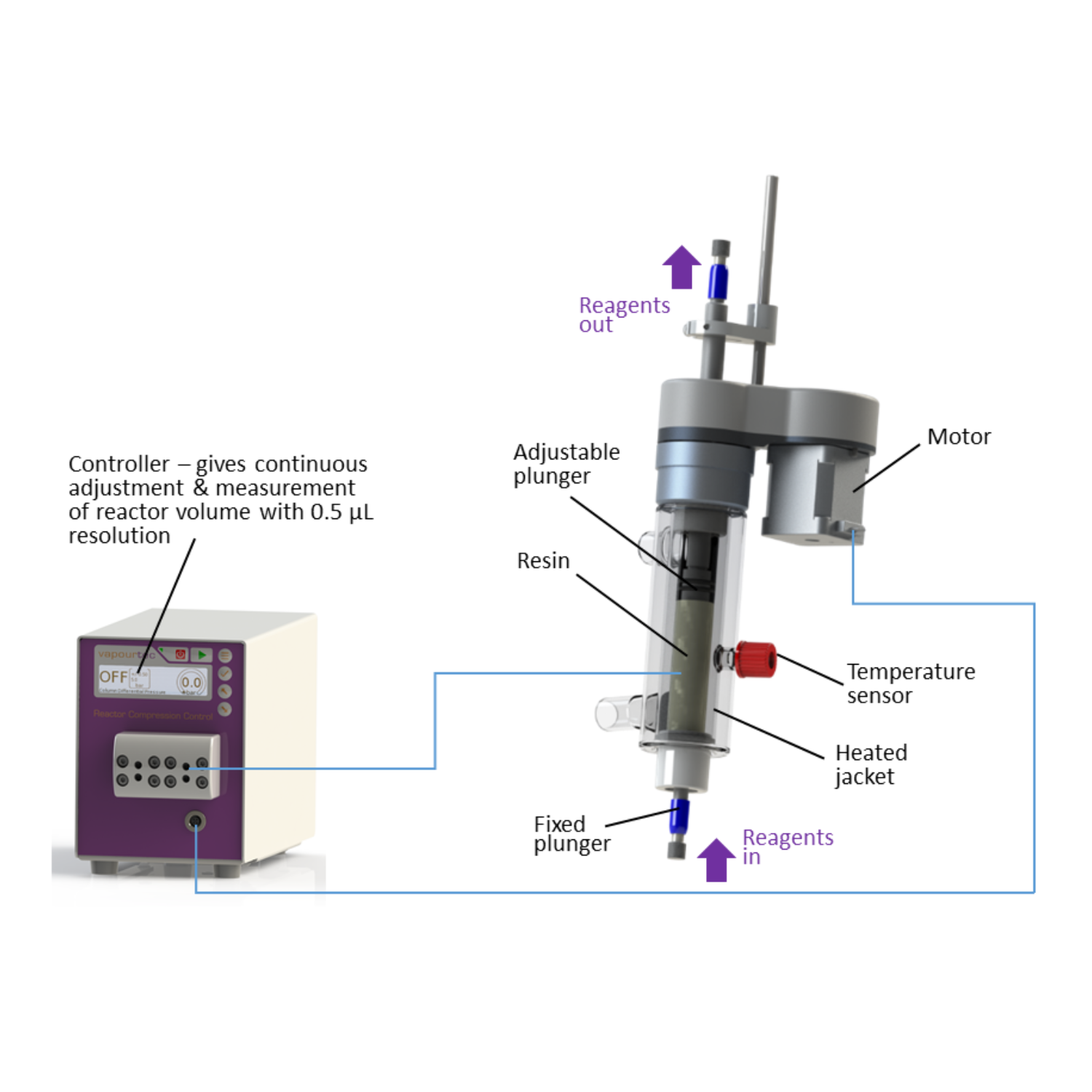
In this application note, we demonstrate how safe, fast, and reliably a peptide is cleaved from a resin in continuous flow. Different cleavage conditions were evaluated using Glucagon-like peptide-1 (GLP-1) as an example peptide. By using the Variable Bed Flow Reactor (VBFR), the packing density of the resin was controlled throughout the reaction, minimising dilution and eliminating the channelling of reagents. Temperature, residence time, and cleavage cocktail were evaluated. The optimised protocol yielded GLP-1 with a crude purity of 82 % in only 30 minutes, compared to a traditional batch reaction taking between 2 to 4 hours.

Automated CF SPPS and evaluation of GLP-1 peptide

Solid Phase Peptide Synthesis GLP-1 30-mer

Application Note 69 – February 2021

This application note illustrates the capabilities of a Vapourtec RS-400 system, equipped with a novel flow reactor, the Variable Bed Flow Reactor, for continuous flow Solid-Phase Peptide Synthesis. Glucagon like peptide (GLP-1), a 30-mer peptide used to treat diabetes, was chosen to show the advantages of the Variable Bed Flow Reactor for solid-phase peptide synthesis regardless of the resin core used. By keeping the solid media continuously packed, the contact surface between the resin’s active sites and the reagents pumped through is optimised. The use of the Variable Bed Flow Reactor not only reduces the amount of solvent required, but it also ensures a more efficient synthesis.